Integrating Finnish into Aalto’s English-language Technology Degree: From Pilots To a Scalable Model
by Yusein Ali, University Lecturer at the Department of Information and Communications Engineering and Elisa Räsänen, University Lecturer at the Language Centre
The internationalisation of higher education has made it easier for students to pursue degrees outside their home countries. English-language degree programmes, including Aalto’s Bachelor of Science and Technology, can open access to high-quality education across national borders and allow students to focus on building professional expertise in their chosen fields (Aalto University, language guidelines).
This can create a tension: English allows students to complete their studies and enter many professional environments, but relying primarily on English may leave fewer opportunities and incentives to develop the Finnish skills needed for longer-term employment and participation in society.
This tension is particularly visible in Finland. International students can complete their studies, participate in research and pursue careers in many technology-sector organisations using English (Finnish National Agency for Education, 2025; OECD, 2025; International Technology Experts 2025). Students in English-language engineering education may therefore see little immediate professional need to learn Finnish (Tsishuk, 2024).
Yet the value of the local language extends beyond the immediate demands of study or professional communication. Participation in everyday life and employment in Finland usually require at least some Finnish (see, for example, Lauronen, 2025, p. 15). Finnish can make it easier to participate in local communities, build social relationships and develop a stronger sense of belonging (Lu and Everson Härkälä, 2024). It can also broaden career options and provide access to professional networks and organisations in which Finnish remains an important means of communication (International Technology Experts 2025; OECD, 2025).
This gap between English-medium education and the Finnish-language demands of longer-term life in Finland and employment raises a practical curriculum-design question: how can an English-language degree programme create meaningful opportunities to learn Finnish without weakening its disciplinary objectives?
In its 2026–2028 curriculum development goals, Aalto identifies two priorities relevant to this question: recognising the role of Finnish and Swedish alongside English, and strengthening international students’ employment prospects. The Technology Sector Finnish project turns these priorities into a concrete programme-level approach. It investigates how Finnish-language learning can be incorporated into technical courses, supported through field-specific language instruction, and connected with students’ study planning.
Rather than simply adding isolated Finnish exercises to technical courses, the project seeks shared learning contexts and discipline-specific content through which language learning and technical education can reinforce one another. Its aim is to support sustainable, working-life-oriented internationalisation—something that cannot be achieved through language courses alone.
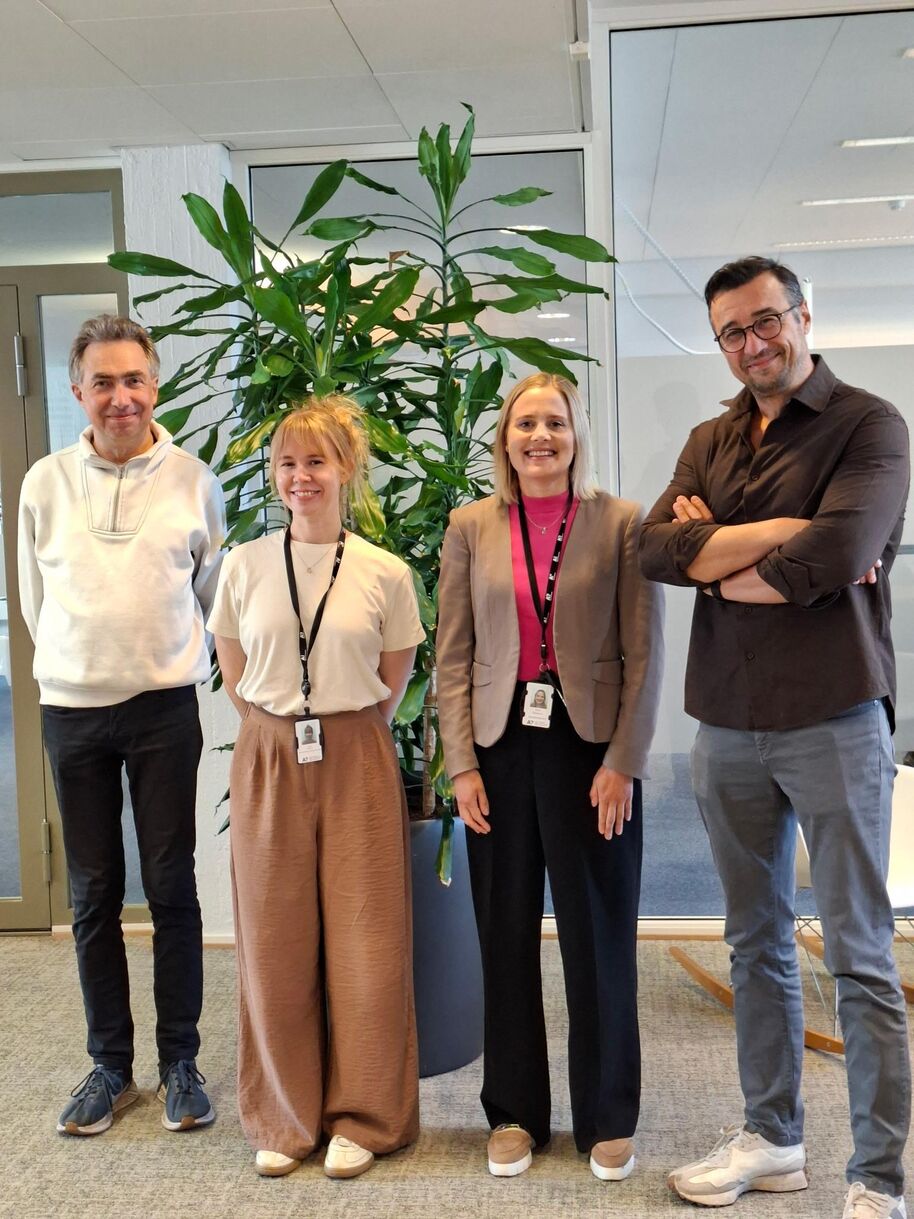
This work requires expertise from both language and technical education. The project therefore brings together a multidisciplinary team of two Finnish-language instructors from the Aalto University Language Centre and two technology instructors from the School of Electrical Engineering.
The project approaches this work through three connected strands: helping students begin and plan their Finnish-language learning, developing field-specific Finnish instruction, and integrating Finnish-language learning into degree-program courses. These strands reinforce one another. Counseling helps students understand how Finnish can become part of their studies and future working lives, language courses support systematic development, and technical courses provide authentic disciplinary contexts in which Finnish can be encountered and used. This post introduces the three strands and shows how collaboration connects them.
Helping Students Get Started: Motivation, Counseling, and Language Planning
Supporting international students’ motivation to learn Finnish was one of the project’s central concerns. We considered how and when this support could begin and identified the period before students arrived in Finland as an early opportunity. We therefore added information about Finnish-language learning to the degree program’s pre-arrival newsletter.
After arriving in Finland, international students participate in an orientation week, during which they are introduced to Aalto University and university life. As part of the orientation, we organized Finnish-language mingling sessions and discussed how learning Finnish can support students’ participation in Finnish society and working life. We encouraged students to start learning Finnish early and emphasized that language learning also takes place through interactions and activities beyond the classroom.
Motivation must also be supported by practical study planning. Aalto’s study coordinators have extensive experience helping students develop study plans that combine major, minor, and language studies. Their views on what an effective language-study planning tool should provide therefore guided the development of the Finnish language-study planner. One of the project’s Finnish-language instructors led the development of the tool in collaboration with the Kielibuusti project. The resulting tool helps students understand the available learning pathway and plan the progression of their Finnish-language studies. Read more: Plan your Finnish language studies.
Developing field-specific language instruction
The project established B1-level Finnish by graduation as a program-level target. Supporting students in reaching this target required a sequence of language courses that would build general proficiency while increasingly addressing the needs of technology students. Students first complete Aalto’s regular Suomi 1 and Suomi 2 courses to acquire a basic command of Finnish. They can then progress to the Technology Sector Finnish courses developed through the project:
- LC-7230 Tekniikan alan suomi 3 (3 credits): everyday and student-life situations
- LC-7240 Tekniikan alan suomi 4 (3 credits): job seeking, working life, and professional networking
- LC-7250 Tekniikan alan suomi 5 (3 credits): future society, including environmental and population challenges, sustainable development, future technologies, technology-related news, and start-ups
- LC-7260 Tekniikan alan suomi 6 (3 credits): the language of students’ own fields, including project work and field-specific vocabulary
The courses support students in communicating in simple everyday situations as well as in situations they are likely to encounter during their studies and working lives. As students progress through the course sequence, the connection with their own fields becomes stronger. In the more advanced courses, particularly Tekniikan alan suomi 4–6, selected themes, materials, and activities can be drawn from the technical courses in the degree program. The purpose is not to teach the technical subjects again in Finnish, but to help students discuss familiar disciplinary content, describe their work, and participate in field-specific professional situations using Finnish.
Across the course sequence, students build a portfolio that can support them when seeking employment. They also develop strategies for continuing to learn Finnish through everyday life, their studies, and their work. The project created accompanying learning materials so that other institutions could adapt the technology-focused Finnish curriculum to their own contexts.
Drawing appropriate content from technical courses requires collaboration between Finnish-language and technical instructors. This relationship also works in the other direction: technical courses can provide students with authentic, low-threshold opportunities to encounter and use Finnish as part of their disciplinary studies.
Integrating Finnish into technical courses
Because language learning involves the whole community (see e.g. Strömmer, 2017), we piloted ways to bring Finnish into English-medium courses. This way, students would encounter field-specific language in authentic contexts rather than as a separate add-on. In the first project cycle, piloting was conducted in two technical courses:
- ELEC-C7222 Embedded Programming with Communication Devices: We created short topic introductions, bilingual learning materials, and terminology support aligned with technical terminology relevant to the Finnish job market.
- ELEC-C7420Basic Principles in Networking: We supported a pilot that used AI tools to generate supplementary Finnish-language learning materials for students.
For more on our design challenges and AI-based materials, see the follow-up posts on connecting technical education with Finnish and on using AI-generated videos as an additional resource for Finnish-language learning.
Developing a Transferable Model through Collaboration
The three strands described above were developed through collaboration extending beyond the core project team. Within Aalto, we worked with teaching teams from the Schools of Electrical Engineering and Chemical Engineering to share our lessons learned and discuss how Finnish-language learning could be connected with different disciplinary contexts. Discussions with Aalto’s educational psychologists and Career Services also helped us consider students’ study paths, motivation, wellbeing and transition into Finnish working life.
These collaborations supported a broader objective of the project: to understand which parts of the approach were specific to an individual course or degree programme and which could contribute to a more transferable model. Rather than assuming that one implementation would work in every context, we sought perspectives from different disciplines and support services and explored how the model might need to be adapted to different students, curricula and professional fields.
We also shared the project through national faculty forums and discussions with other higher education institutions pursuing similar curriculum-development goals. These activities served not only to disseminate the project but also to compare experiences, gather perspectives and examine the relevance of the emerging model beyond Aalto. Through this wider dialogue, we aimed to identify principles that other programmes and institutions could adapt to their own educational contexts.
Conclusion
To reach our goal of supporting international students’ employability in Finland in an English-medium program, we started by embedding small, authentic Finnish-language touchpoints in the degree program courses: bilingual glossaries, short Finnish readings with guiding questions, or AI-generated videos with a transcript. We also developed field-specific language courses, and provided students with a clear study path and advising tool, so that they would have a concrete idea of how to get started.
We are in the process of creating a scalable model so that other instructors can benefit from the practices we developed. We will use the feedback collected from the pilots to refine a model to be used to plan how to integrate Finnish into English-language degree programs across different disciplines. We are happy to share materials and lessons learned as we refine a model that others can adapt.

Show other posts from this blog

From Design Principles to Course Implementation
Explains how Finnish was added to an engineering course through optional bilingual content, terminology support, comprehension tasks, and feedback.